
Elmwood Park Neighbor Record Sources
A block search works best as several narrow checks. CookViewer supplies parcel geometry and nearby selections. The Assessor confirms each PIN and tax card. Clerk recordings add deed context only when ownership history matters. Voter data and community groups have separate limits and should never be treated as open household directories.
| Source | What It Shows About a Block | Access |
|---|---|---|
| CookViewer | Parcel outlines, PINs, nearby parcels, layers, and reports | Free county viewer |
| Cook County Assessor | Owner, situs, tax mailing address, class, and district | Free property portal |
| Illinois voter records | A personal registration match or restricted file access | Statutory limits and redactions |
| Neighborhood Watch | Zones, meetings, and police contact | Village page; no member roster |
| Local History Room | Historic photos, articles, yearbooks, and books | Library appointment |
A property owner can live elsewhere, while a current resident may be absent from the deed and tax rolls. A tax mailing address is for bill delivery. A situs address marks physical location. A PIN identifies a tax parcel. Keeping those fields separate prevents an owner list from being mislabeled as Elmwood Park neighbors.
Define Nearby Elmwood Park Parcels
Choose a repeatable boundary before collecting names. “Neighbor” might mean a touching parcel, a parcel directly opposite the target, every lot on one block face, or all parcels within a small radius. State that rule with the results. Corner parcels, rear lots, alleys, and irregular boundaries make visual guesses unreliable.
Use parcel lines, not roof shapes or lawn edges. One street-number range can include separate tax lots, and a corner building may use a mailing street different from the side facing the target. For a whole named street rather than an immediate block, use the Elmwood Park street directory workflow.
Block rule. Record the boundary definition, portal capture date, and each distinct PIN before comparing owners or addresses.
CookViewer Finds Elmwood Park Neighbors
The CookViewer parcel map accepts an address or PIN and supports parcel selection, Nearby Search, layers, comparison, reports, and printing. Select the target parcel first. Apply a small radius, then inspect touching or immediately facing parcels one by one.
CookViewer 3.1 added report, layer, and nearby-tool improvements in 2025. Its parcel report can export CSV or XLSX, while print tools create selected parcel, aerial, or layer PDFs. Those files are useful working lists, not ownership proof. Confirm each row against the Assessor card and save the date.
Read the county CookViewer update with the captured interface.
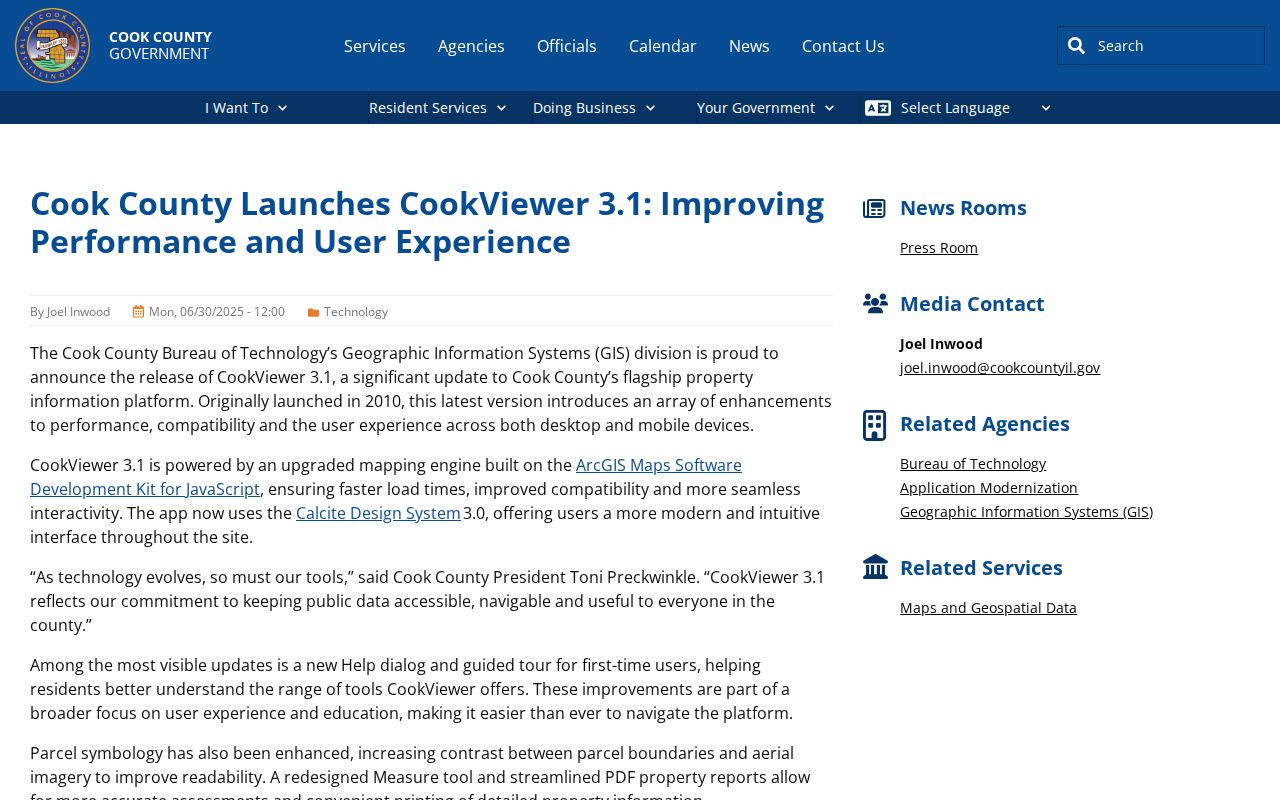
The capture documents the current nearby-tool context. Use the map to select parcels, then return to the official card for the fields describing each lot.
Map Elmwood Park Neighbor Parcels
The reliable process moves from one known address to a controlled list of surrounding parcels. A map label never proves residence.
- Search the target address in CookViewer and copy its PIN.
- Use Nearby Search, then select parcels that meet the stated block rule.
- Open each parcel in the Assessor system and record its PIN, situs address, mailing address, class, and tax district.
- Use the Clerk deed index only when the question requires title history. Keep every parcel chain separate.
- Save the capture date and verify exports against the live parcel card.
The Cook County sample property detail shows the official card used for confirmation.
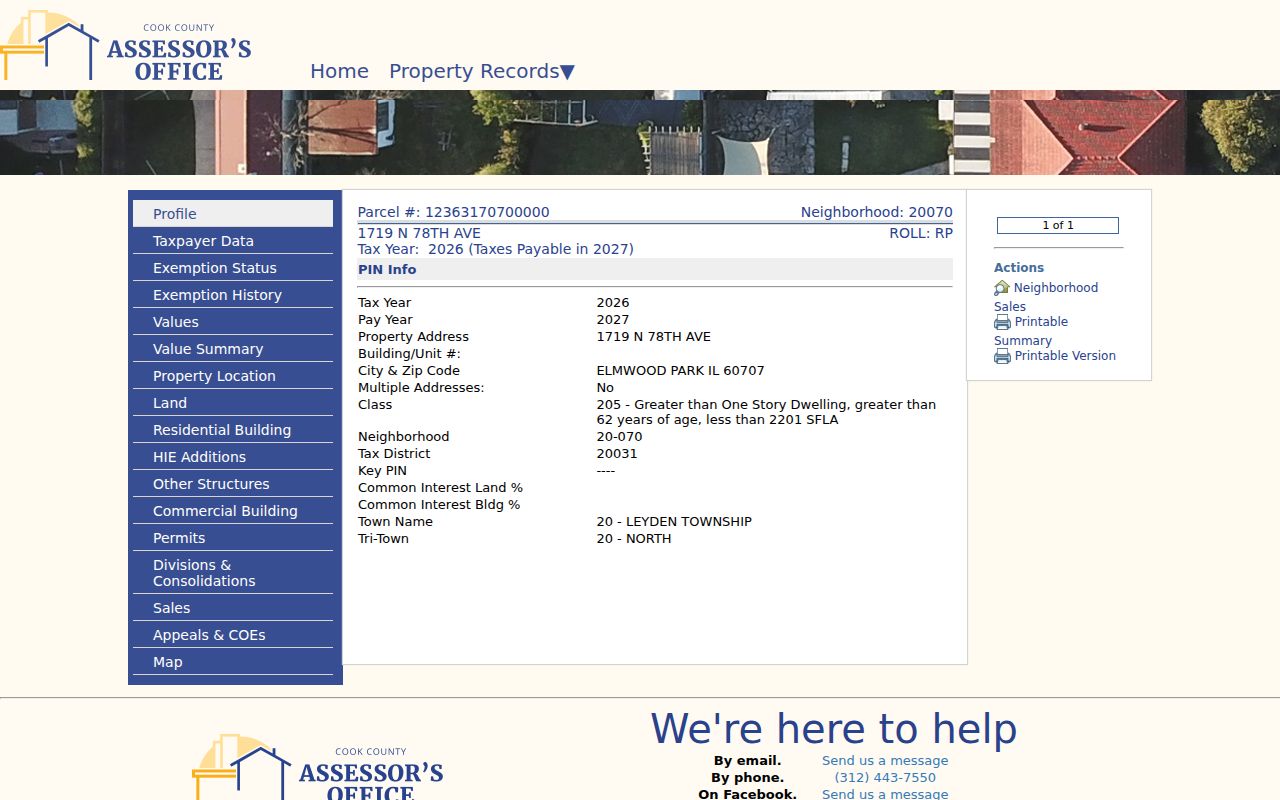
The image reinforces the parcel-by-parcel method. Adjacent homes can have different PINs, legal lots, tax districts, and mailing information.
Official Elmwood Park Block Evidence
Commercial neighbor tools may merge public files, old directories, and inferred links. Convenience does not make a person-address match current. Official sources are narrower but identify the custodian, searched field, and capture date.
| Source type | Strength | Limit |
|---|---|---|
| County parcel records | Official PIN, boundaries, and owner card | Owner may not occupy the parcel |
| Clerk recordings | Transfer parties and legal descriptions | Not a live household roster |
| Commercial category | Combines sources quickly | Dates and inferred links can be unclear |
For civic curiosity or a property question, cite the parcel card or deed index directly. Do not publish an exported block roster or imply that every owner occupies the address.
Illinois Voter Limits for Neighbors
The Illinois voter registration lookup takes first name, last name, birth date, and five-digit ZIP to confirm a personal match. It does not offer an ordinary street-wide browse. A 60707 match also reaches beyond Elmwood Park because postal geography crosses municipal boundaries.
Illinois Election Code section 1A-25 permits defined inspection and copying with redactions, but the state voter file is issued only for statutory political purposes and may not be used for commercial solicitation or business use. Protected voters and Address Confidentiality Program participants may not appear with a real address. A missing name can reflect lawful protection rather than bad data.
Note: Treat voter information as a restricted confirmation source, never as a bulk list of households or Elmwood Park neighbors.
Separate Elmwood Park Neighbor Deeds
Ownership history can explain why two adjoining parcels share a family name, trust, driveway, or old subdivision reference, but each PIN needs its own deed trail. Search a nearby parcel in the Cook County Clerk recording index only when the block question calls for title context. Begin with the Assessor owner and PIN, find a matching deed, then check its legal lot against the parcel map. Do not carry a seller, trust, or legal description from one lot into the next merely because the street numbers are close.
Recorded documents can include deeds, mortgages, releases, liens, plats, easements, trustee instruments, and transfer-on-death documents. A grantor is the transferring party, and a grantee is the receiving party. Neither label establishes who now occupies the property. Corrected deeds, estate transfers, foreclosures, and corporate or trust names can create branches in the record rather than a simple owner-to-owner line.
If an instrument or plat is unavailable through web purchase, contact Clerk Recordings or use the office access route documented by the county. Parcel boundaries should come from the official map and recorded description, not an aerial image. This is especially important for corner lots, rear parcels, condominium interests, and shared features that make Elmwood Park neighbors appear closer in the tax data than their legal parcels are.
Historic Blocks and Elmwood Park Neighbors
The 1929 Sanborn volume includes part of Elmwood Park within a mapped area bounded near North 75th, North Austin, Belmont, and West North. Its leaves can show building footprints, house or block numbers, occupancy labels, and street edges at 50 feet to one inch. Those details help test whether neighboring structures existed and how the block was arranged at that date.
Sanborn evidence describes buildings, not a complete set of people. Pair a mapped address with the Newberry Library’s 1927-1928 Elmwood Park and Mont Clare suburban directory headings, then compare a public census schedule or a Local History Room source. Federal household schedules are public through 1950 under the 72-year release rule. A directory entry or census household can add historical neighbors, but boundaries and suburb labels may differ from the modern Village.
The Elmwood Park Library Local History Room offers appointment access to photographs, yearbooks, articles, artifacts, and local books. Give staff a street, block, family name, school year, or approximate decade. That focused request is more useful than asking for an entire neighborhood roster, and it can bridge a year for which no public directory image was found.
Elmwood Park Neighborhood Watch Zones
The Village Neighborhood Watch page publishes zone material, meeting notices, a police zoning map, and the non-emergency number 708-453-2137. It does not publish a searchable member or household roster. Its value is showing which zone covers a block and where meetings are announced.
Open the Village zone source before viewing the local capture.
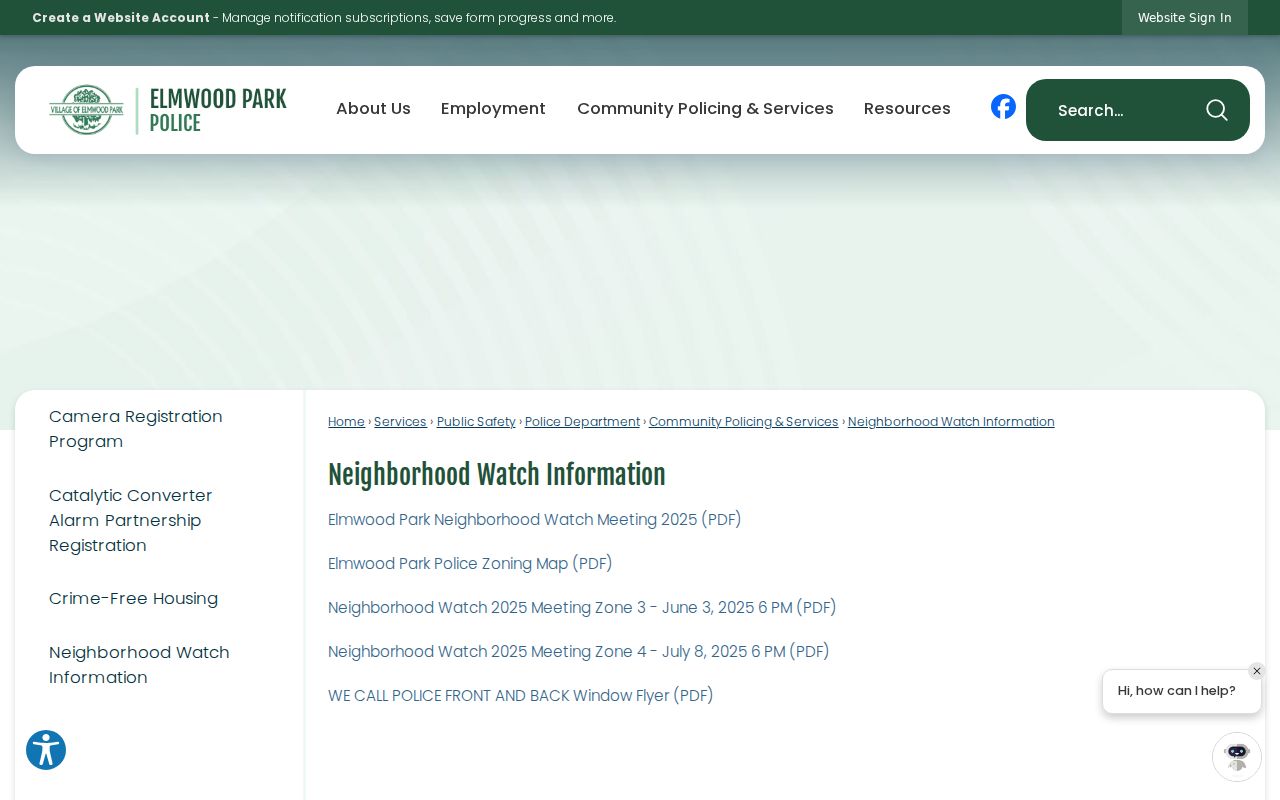
The page connects a block to public safety meetings without exposing private membership. Contact police through the published route rather than seeking an informal roster.
Elmwood Park Community Directory Gaps
The Village Comprehensive Plan and neighborhood material name the Elmwood Park Neighborhood Civic Organization, or EPNCO, but no current public member directory or contact list was located. The Village staff search is an office directory, not a household list. No public Chamber, fraternal, union, parish-wide, or neighborhood resident index was verified.
Neighborhood Watch
Public zone map, meetings, and police contact. No member roster.
EPNCO
Named in planning material. No verified current member directory.
Local History Room
Photos, yearbooks, articles, artifacts, and books for historic block context.
For older neighbors, the 1929 Sanborn volume can show footprints, block numbers, and uses in its mapped portion, while directories and census schedules may add names. The map is not a resident roll. Library staff can bridge a known street, school year, family name, or photograph to the right collection.
Village permits, code cases, pre-sale inspection files, and incident records may also carry an address. Elmwood Park makes these defined request targets through its FOIA directory, not a public neighbor index. Ask for one record type and a clear date span. A focused request reduces unrelated personal material and makes the custodian’s search more precise.
Privacy Limits for Elmwood Park Neighbors
Parcel and deed records do not disclose a full household. Renters, children, relatives, guests, and other occupants are not reliably indexed by address. Utility, delivery, and similar private account data should not be sought as block evidence. Courts, motor vehicle files, voter records, and vital records apply their own redactions and access rules.
The Illinois Address Confidentiality Program gives eligible victims and household members a substitute address and mail forwarding. It cannot always erase an older public record or guarantee property-record confidentiality. Never try to reverse-engineer a protected address from tax, voter, court, or social sources.
Lawful use. Use neighbor records for civic curiosity, reconnecting, property questions, or personal safety awareness. Never watch, intimidate, harass, or harm another person.